Invicti IAST for Node.js - AWS Elastic Beanstalk
Invicti IAST network prerequisites
The IAST sensor must be able to reach your Invicti platform to transmit data to the DAST scanning engine.
This document explains how you can run a Node.js application in AWS Elastic Beanstalk and then use Invicti IAST to run an interactive application security testing (IAST) scan for that application.
There are four steps to these instructions.
info
Before deploying Invicti IAST, note the list of supported servers and frameworks available in the Invicti IAST for Node.js overview document.
Step 1: Create your Target in Invicti Platform
For this example, we assume that the URL for your Target is http://eb.invictiexample.com.
- Create a Target in Invicti Platform with your URL.
- Enable Invicti IAST on the Target settings page.
- Download Invicti IAST node-iastsensor.tar and save this file for use later on.
Step 2: Create your application source code bundle
This simple web application is defined through the following file structure:
- ~/axexample-nodejs/
- ~/axexample-nodejs/app.js
- ~/axexample-nodejs/package.json
- ~/axexample-nodejs/node-iastsensor.tar
- Create your /axexample-nodejs/app.js file to read as follows:
const app = require('express')();

var port = process.env.PORT || 60000;

app.get('/', function (req, res) {
    res.send(
        '<html><body>' +
        '<h1>Test Node.js Site Example for AWS Elastic Beanstalk</h1>' +
        '<br>' +
        'Hello World! - Main Page' +
        '<br>' +
        '<a href="/page1">Goto Page 1</a>' +
        '</body></html>'
    );
});
app.get('/page1', function (req, res) {
    res.send(
        '<html><body>' +
        '<h1>Test Node.js Site Example for AWS Elastic Beanstalk</h1>' +
        '<br>' +
        'Hello World! - Page 1' +
        '<br>' +
        '<a href="/">Goto Main Page</a>' +
        '</body></html>'
    );
});
app.listen(port, function(err){
 if (err) console.log(err);
 console.log("Server listening on port: ", port);
});
- Create your /axexample-nodejs/package.json file to read as follows:
{
  "name": "axexample-nodejs",
  "version": "1.0.0",
  "dependencies": {
    "express": "*",
    "node-iastsensor": "file:node-iastsensor.tar"
  },
  "scripts": {
    "start": "npx node-iastsensor.tar app.js"
  }
}
- Copy the node-iastsensor.tar file you created earlier into ~/axexample-nodejs/node-iastsensor.tar.
- Finally, build the source code bundle with:
cd ~/axexample-nodejs
zip -rq axexample-nodejs.zip .
- Download your invicti-nodejs.zip file to your desktop and retain the zip file for the deployment.
Step 3: Deploy your web application to AWS Elastic Beanstalk
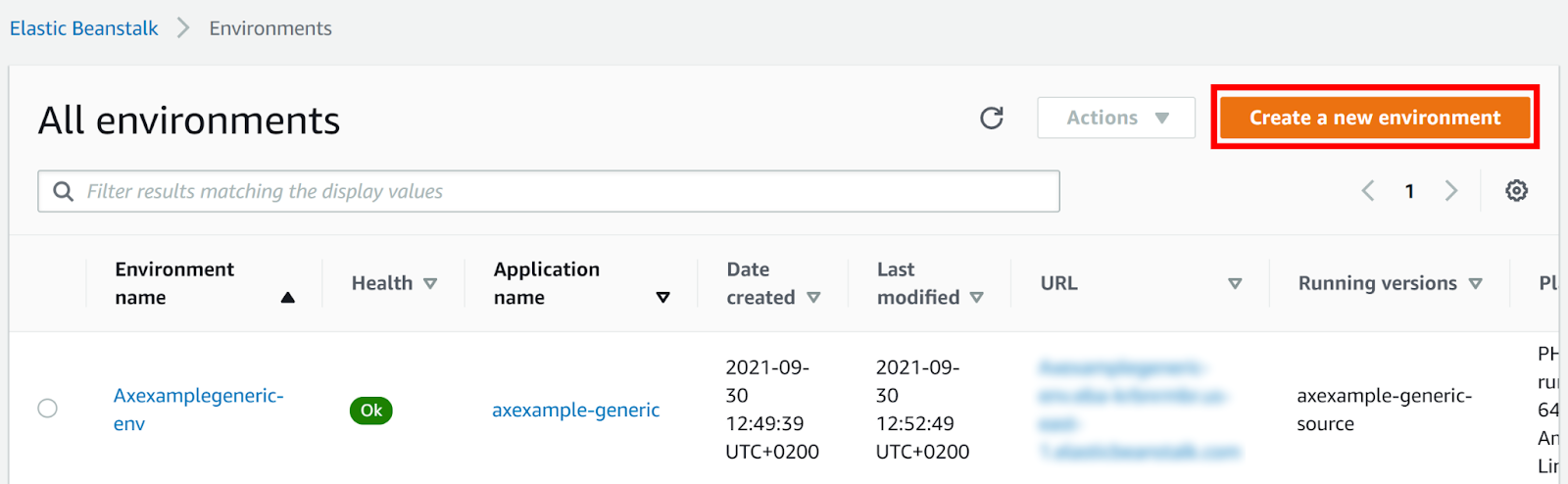
- From your AWS Dashboard, navigate to Elastic Beanstalk > Environments.
- Click Create a new environment.
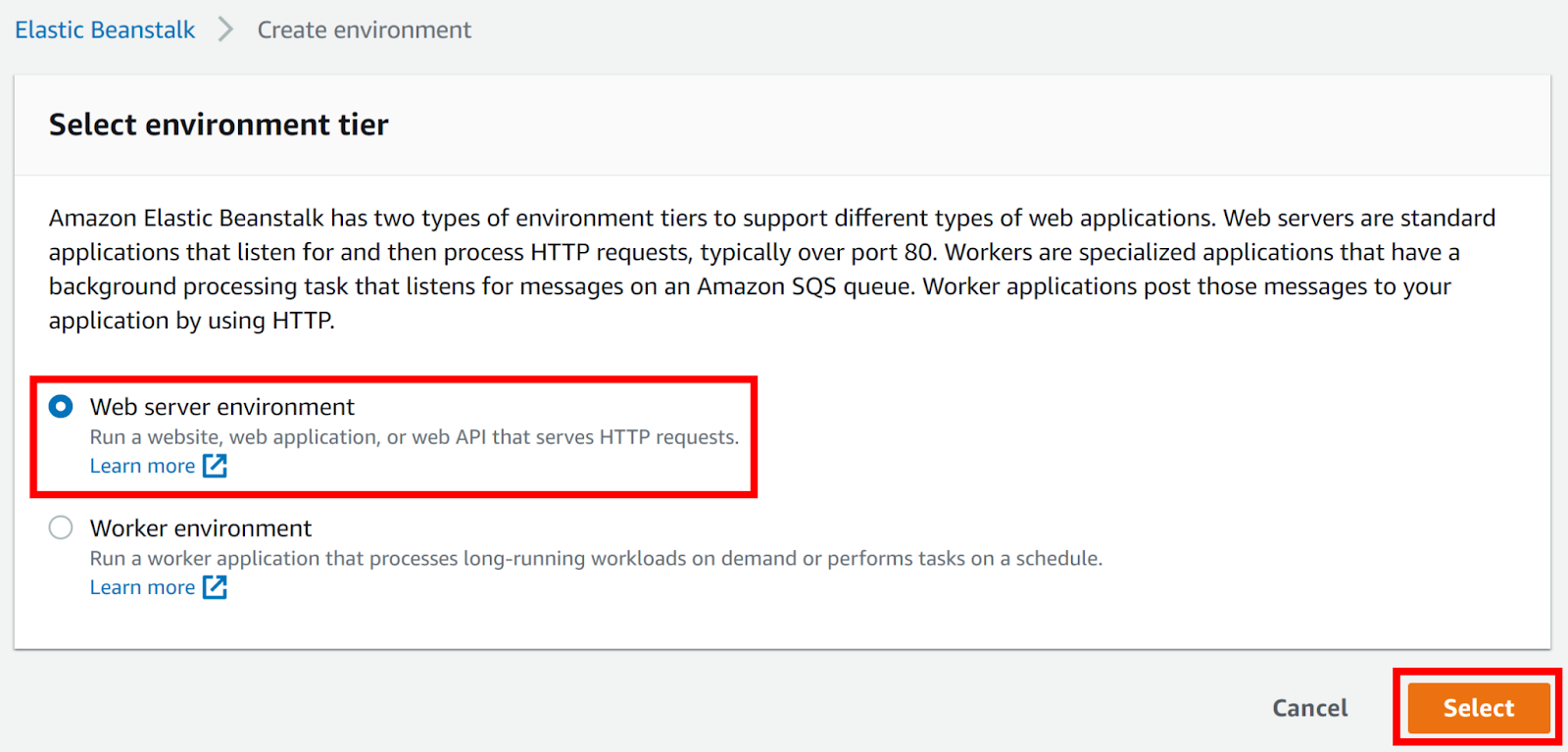
- Set your environment tier to Web server environment, then click Select.
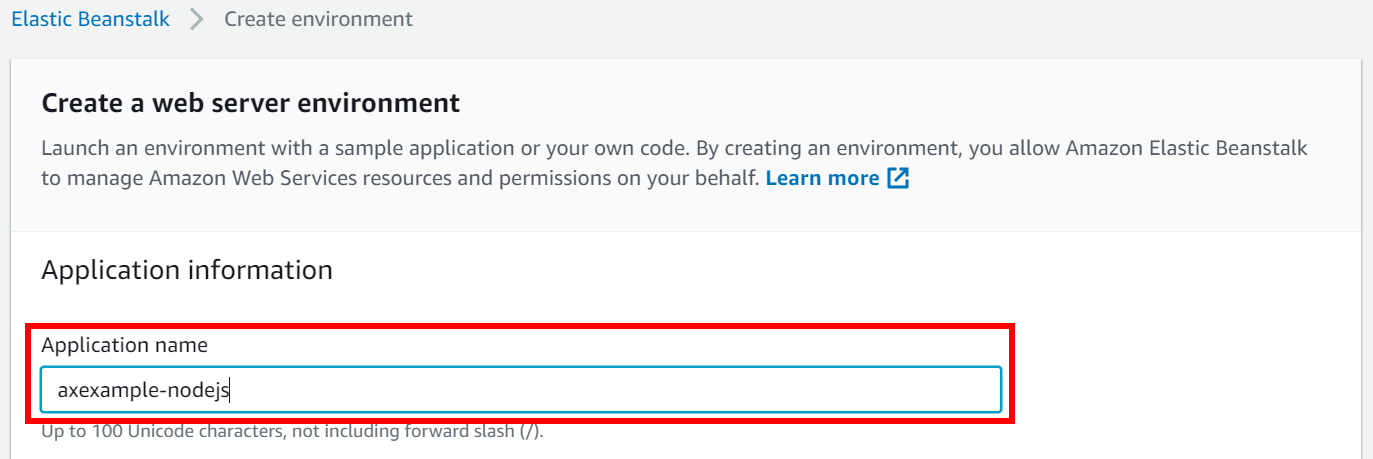
- Set the Application name field to the name for your web application. (In this example we have used the name axexample-nodejs).
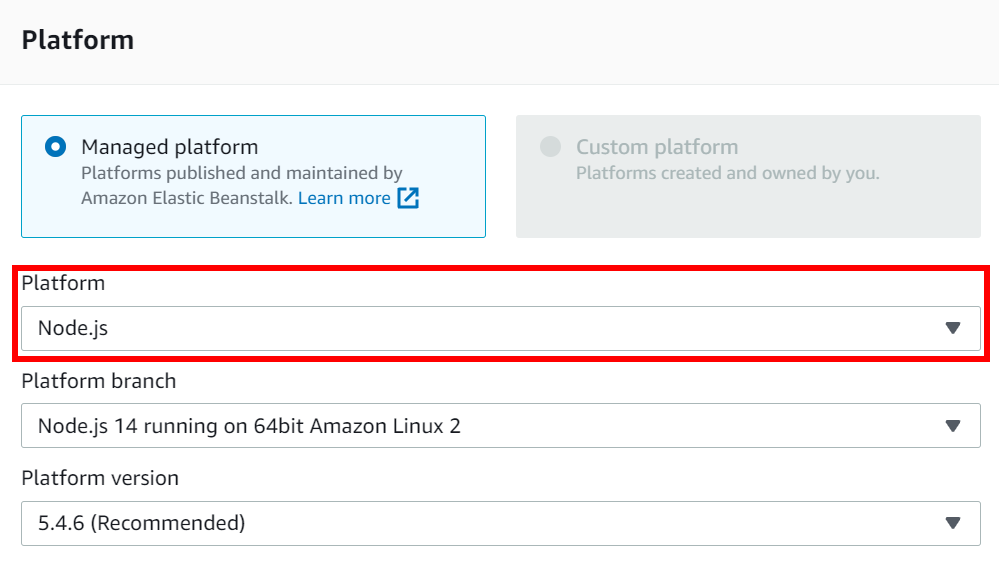
- Set the Platform drop-down to Node.js.
- Select the Upload your code option, then click Choose file.
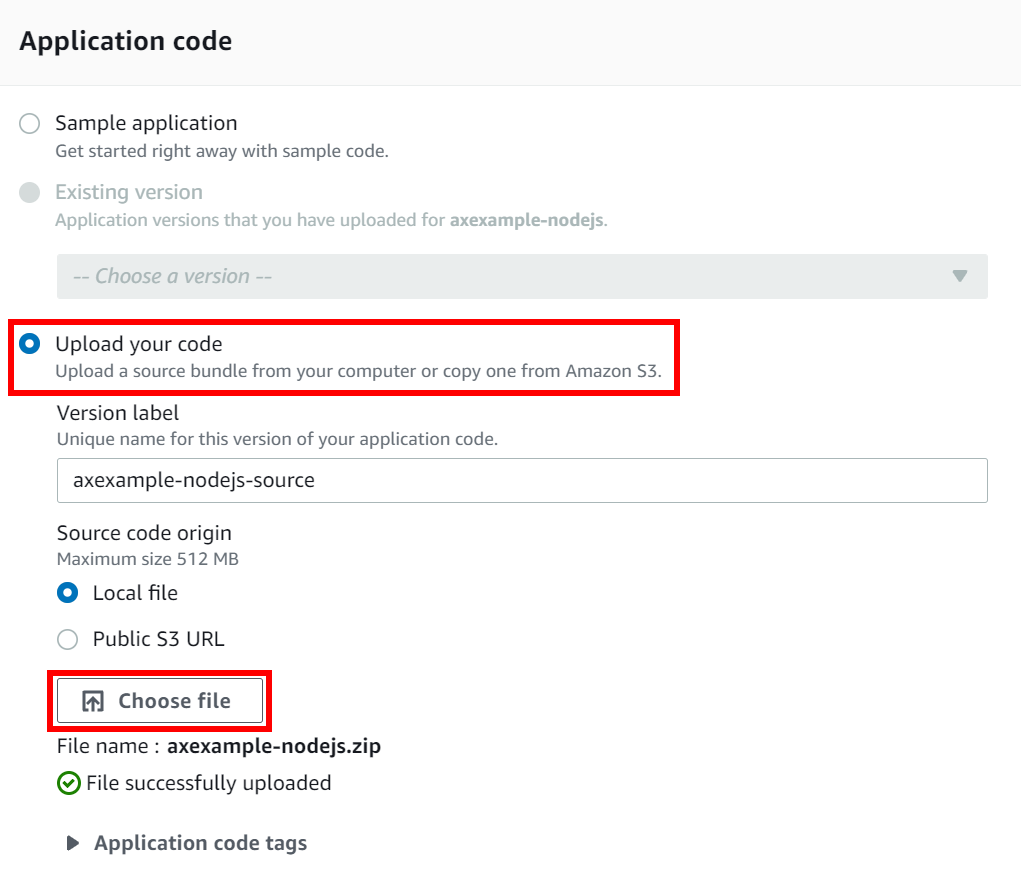
- Select your source code bundle for upload and click Create environment. AWS Elastic Beanstalk now creates your environment. This can take a few minutes.
- When the process is complete you are sent to your environment's dashboard. Take note of your environment's new URL which was created automatically by AWS Elastic Beanstalk. You need this to create a CNAME to point to this URL.
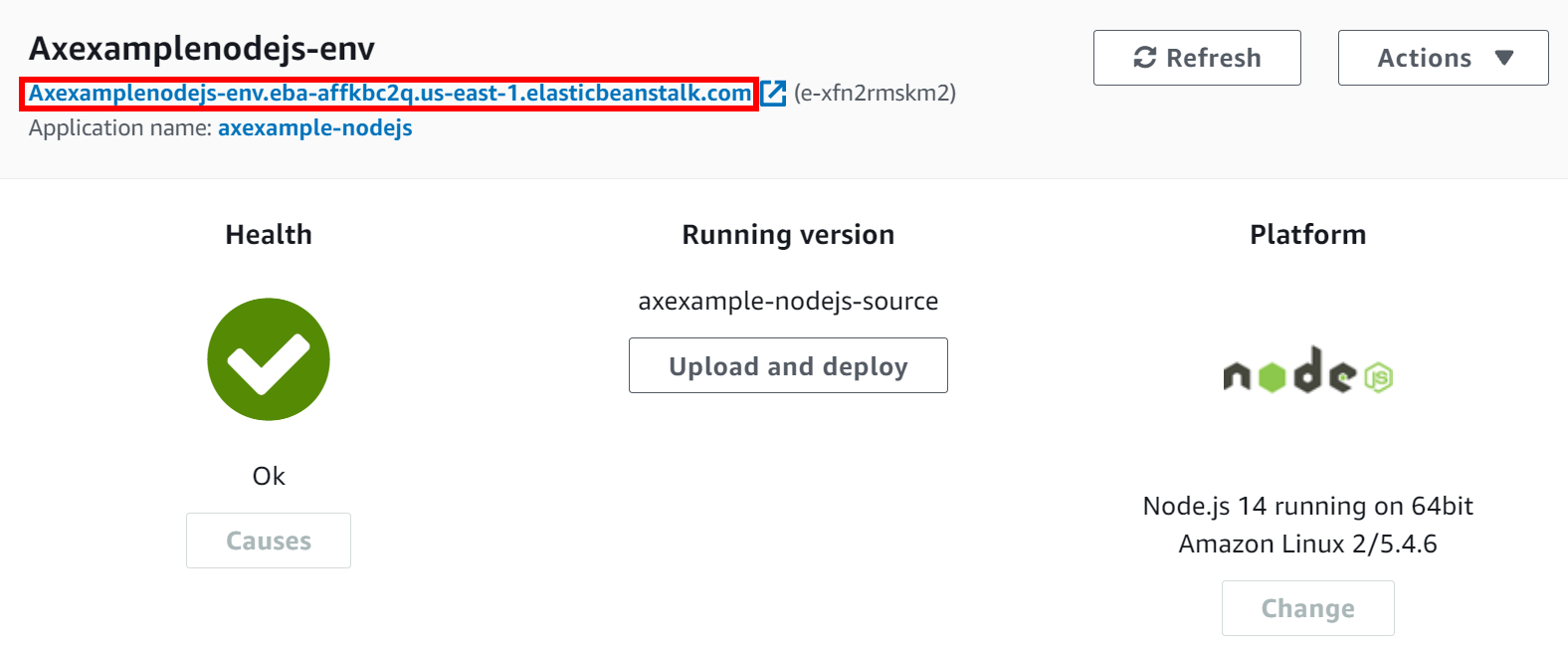
- Create a CNAME for your URL to point to the new URL THAT was created automatically by AWS Elastic Beanstalk. In our example we used the Namecheap cPanel interface to point eb.invictiexample.com to axexamplenodejs-env.eba-affkbc2q.us-east-1.elasticbeanstalk.com.
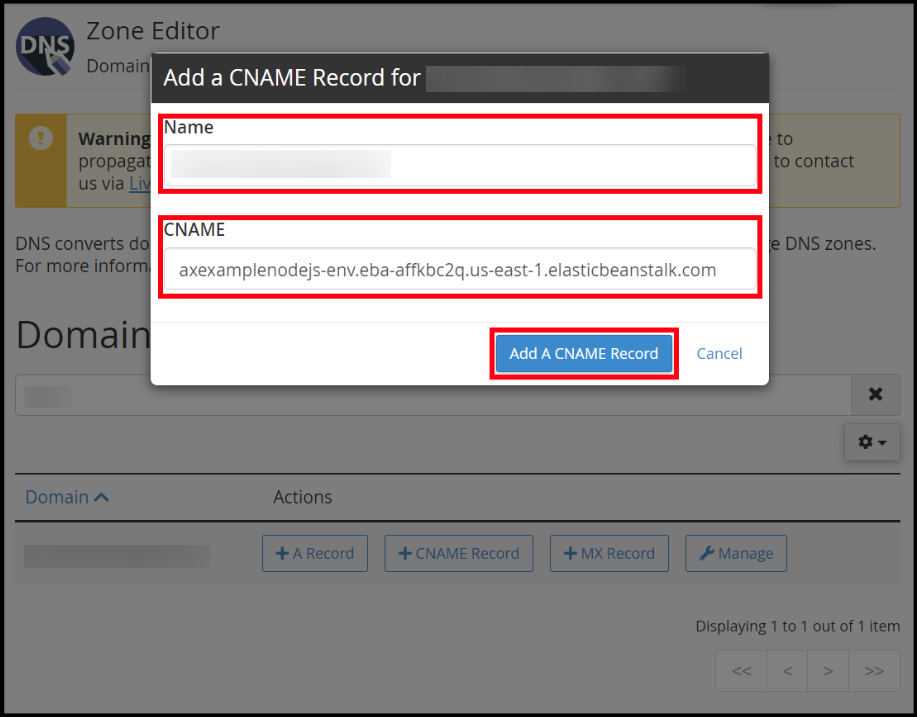
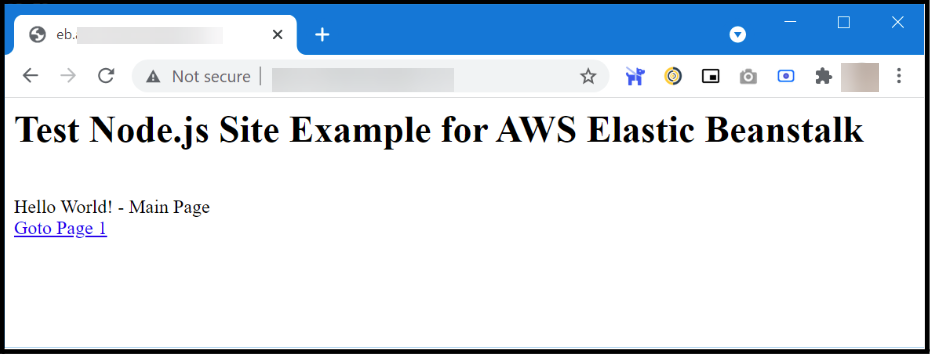
- Once the CNAME record has been added (giving time for DNS records to propagate), you can see the web application you have created by browsing to your URL (in this example http://eb.invictiexample.com).
Step 4: Test and scan your web application
- Point your browser to your web application - in this example http://eb.invictiexample.com - to confirm it's running as intended. You get the following:
- Finally, run a scan on your Target. The Vulnerability detail confirms that Invicti IAST was detected and used for the scan.
Need help?
Invicti Support team is ready to provide you with technical help. Go to Help Center
Was this page useful?