Package: Invicti AppSec Core (on-demand)
Microsoft Teams Integration
Microsoft Teams is a collaboration and communication platform that is part of the Microsoft 365 suite. The Invicti AppSec integration with Microsoft Teams enables security teams to receive real-time notifications about vulnerability events — such as new critical findings, scan completions, or status changes — directly in Teams channels via incoming webhooks.
Purpose in Invicti AppSec
Microsoft Teams is used in Invicti AppSec as an Notification Tool — enabling automated security event notifications to be delivered to Teams channels.
| Use Case | Description |
|---|---|
| Vulnerability notifications | Receive alerts in a Teams channel when new vulnerabilities are discovered or when severity thresholds are crossed |
| Scan completion alerts | Get notified in Teams when a security scan completes |
| Status change updates | Receive updates when vulnerability statuses change (e.g., opened, resolved, re-opened) |
Where It Is Used
| Page | Navigation Path | Purpose |
|---|---|---|
| Integrations — Notification Tools | Integrations › Notification Tools | Admin activation and global configuration |
| Project Settings | Project › Settings › Alerts | Link Teams to a specific project for project-level notifications |
Prerequisites
Before activating the integration, prepare the following:
| Field | Description | Required |
|---|---|---|
| Webhook URL | The incoming webhook URL generated from the target Microsoft Teams channel | Yes |
How to Obtain the Webhook URL (on the Microsoft Teams Side)
- Open Microsoft Teams and navigate to the channel where you want to receive notifications.
- Click the three dots (•••) menu next to the channel name.
- Select Connectors (or Manage Channel › Connectors in newer Teams versions).
- Search for Incoming Webhook and click Configure.
- Give the webhook a name (e.g.,
Invicti AppSec) and optionally upload an icon. - Click Create.
- Copy the generated Webhook URL — you will need this for the Invicti AppSec configuration.
In newer Microsoft Teams versions, Incoming Webhooks may be available under Apps › Incoming Webhook instead of the Connectors menu. The flow may vary depending on your Microsoft Teams version and organization policies.
Activation Steps
Step 1: Navigate to Integrations
From the left sidebar, click Integrations.
Step 2: Open the Notification Tools Tab
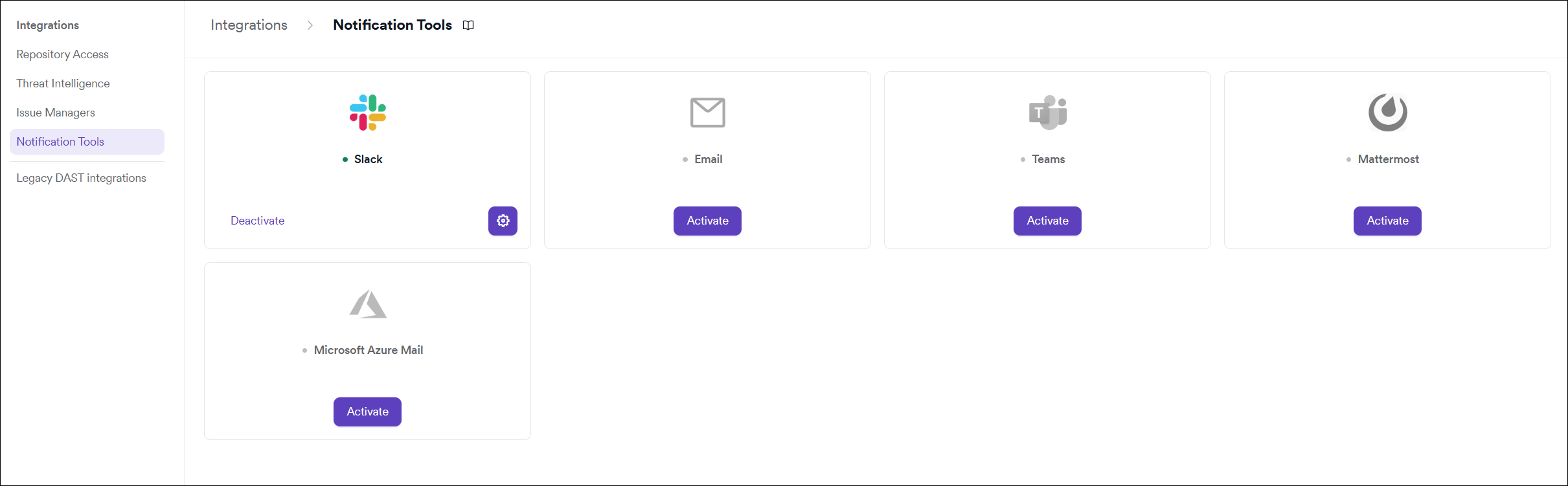
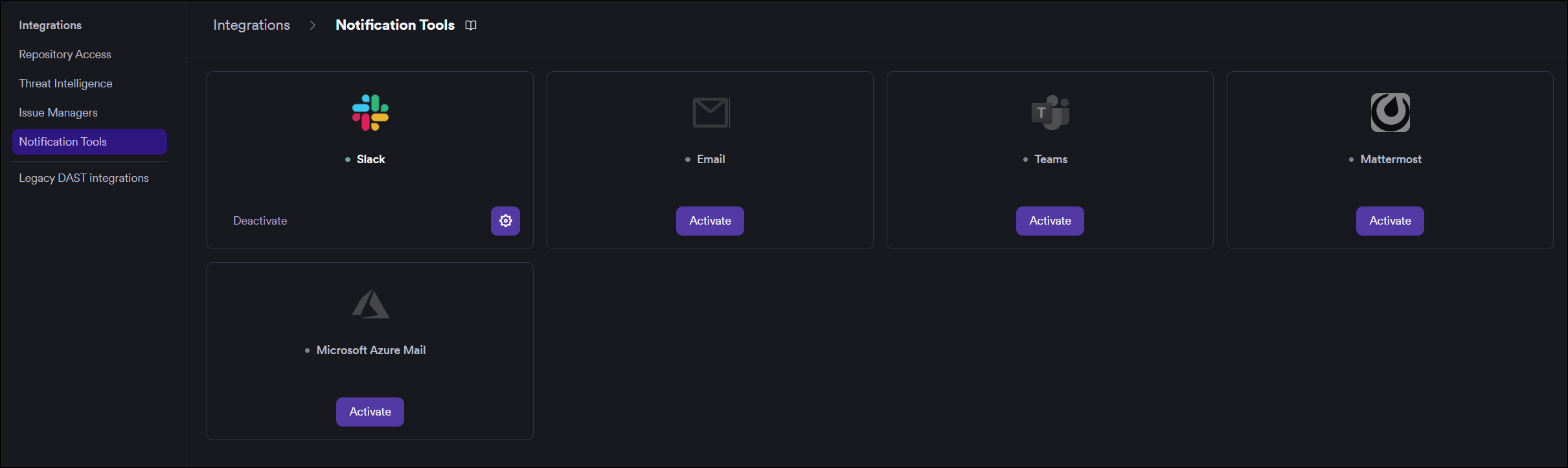
On the Integrations page, click the Notification Tools tab.
Step 3: Find and Activate Microsoft Teams
Locate the Microsoft Teams card.
- If it is not yet activated, click Activate to open the settings drawer.
- If it is already activated, click the gear icon to reconfigure.
Step 4: Fill In the Required Fields
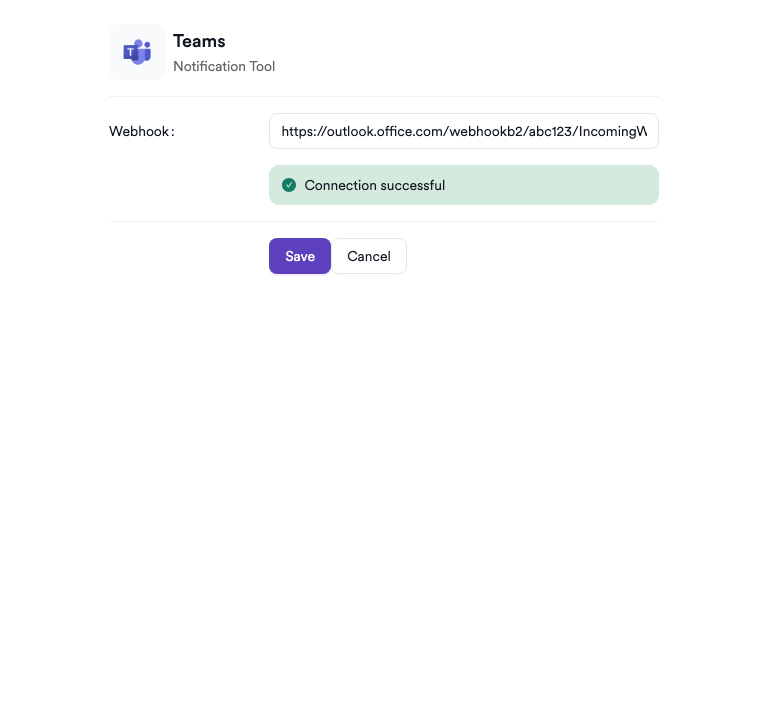
In the settings drawer, enter the webhook URL:
| Field | Description | Required |
|---|---|---|
| Webhook | The incoming webhook URL from your Teams channel | Yes |
Step 5: Test the Connection
Click Test Connection. A green "Connection successful" message confirms that Invicti AppSec can reach the Teams channel via the webhook URL.
Step 6: Save
Click Save to complete the activation.
Summary
| Step | Action |
|---|---|
| 1 | Navigate to Integrations from the sidebar |
| 2 | Select the Issue Managers tab |
| 3 | Find Microsoft Teams and click Activate (or the gear icon) |
| 4 | Paste the Webhook URL from your Teams channel |
| 5 | Click Test Connection — verify the success message |
| 6 | Click Save |
Troubleshooting
| Issue | Resolution |
|---|---|
| Connection failed | Verify the webhook URL is correct and that outlook.office.com (the Teams webhook endpoint) is reachable from the Invicti AppSec network. |
| Webhook URL expired or invalid | Incoming webhook URLs can be revoked or rotated. Regenerate the webhook in Teams and update the configuration in Invicti AppSec. |
| No messages appearing in Teams | Check that the webhook is configured for the correct channel. Also verify that the channel is not archived or restricted. |
| Organization policy blocks webhooks | Some Microsoft 365 tenants disable incoming webhooks at the admin level. Contact your Microsoft 365 administrator to enable this feature. |
Need help?
Invicti Support team is ready to provide you with technical help. Go to Help Center