OWASP Top Ten 2021 report
The Open Web Application Security Project (OWASP) Top Ten 2021 report helps keep your web application secure against the latest threats.
- Since the first edition in 2003, the list of top ten application security risks reflects industry trends, web technologies, and threat landscape.
- Thanks to the OWASP Top Ten 2021 report, you can identify the common weaknesses, which can be present in your web application and exploited by malicious attackers.
- Developers and technical staff can prioritize, understand, and fix security issues because the report provides essential information, such as HTTP requests and responses, to them.
For more information about the OWASP Top Ten 2021, see What the OWASP Top 10 2021 categories mean for OWASP compliance.
This document describes the different sections of the OWASP Top Ten 2021 report. It also explains how to generate and download the OWASP Top Ten 2021 report in Invicti Enterprise and Invicti Standard.
There can be other vulnerabilities and security issues found in your web applications but not listed in the OWASP Top Ten 2021 report. For the comprehensive security report, generate the Detailed scan report.
Click to view a sample OWASP Top Ten 2021 report.
For other reports available in Invicti, refer to the Overview of reports, Report templates, and Built-in reports documents.
Report sections
There are four sections in the OWASP Top 10 2021 report. Each of them is explained in the following sections.
Scan metadata
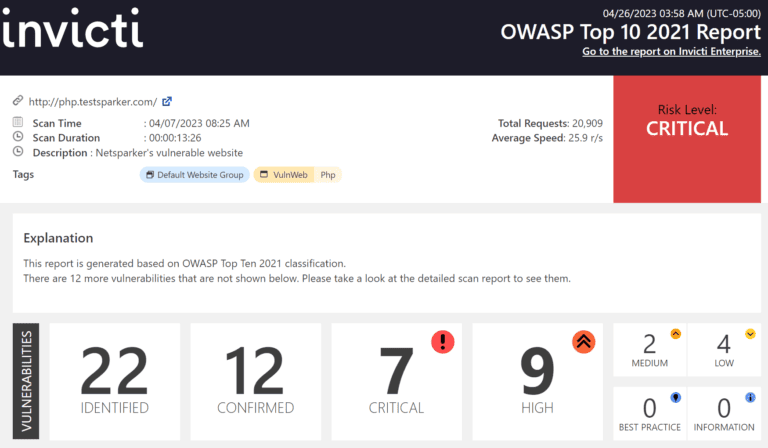
This section provides details on the following items:
- Scan target: the target URL or web application being scanned.
- Scan time: when the scan was initiated.
- Scan duration: how long the scan took to complete.
- Description: additional notes or description of the scan.
- Total requests: number of HTTP requests made during the scan.
- Average speed: the average scanning speed.
- Tags: labels applied to the scan for organization.
- Risk level: the overall risk assessment of the target.
Vulnerabilities
This section provides a numerical and graphical overview of:
- Numbers: the numbers of issues detected at various vulnerability severity levels.
- Identified vulnerabilities: the total number of detected vulnerabilities.
- Confirmed vulnerabilities: the total number of vulnerabilities that Invicti verified by taking extra steps such as extracting some data from the target.
Vulnerability names and details
This section describes all identified issues and vulnerabilities, along with their impact and proof of exploit. It also explains what actions to take and a remedy for each one, including external references for more information.
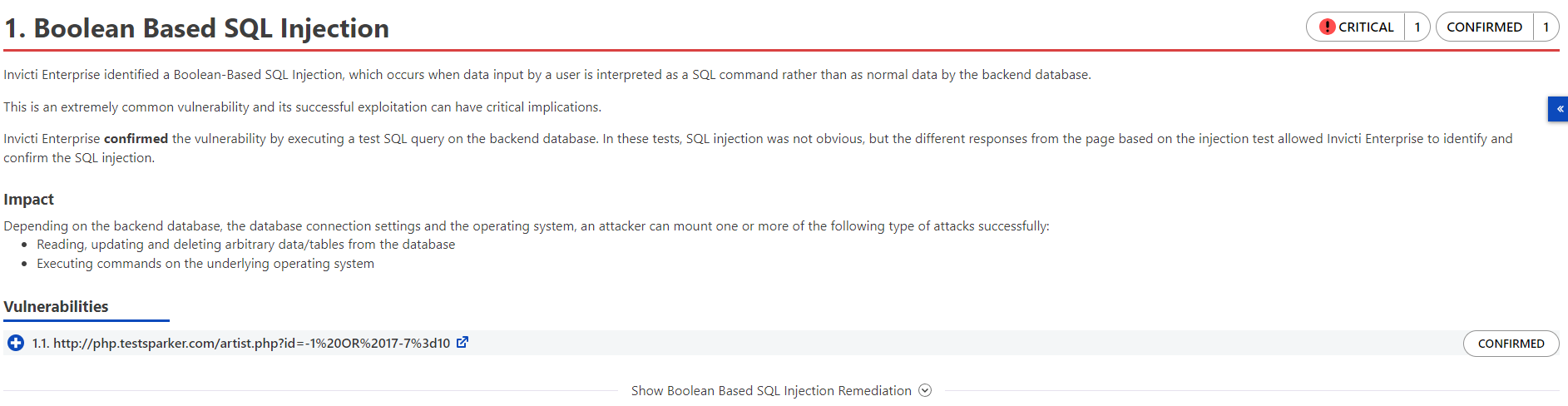
The following list explains the headings in the vulnerability names and details section:
- Name: the name of the identified issue.
- Tag: the label to group, organize, and filter issues in the target web application.
- Proof of exploit: a piece of evidence supplied to prove that the vulnerability exists, showing information that's extracted from the target using the vulnerability. For more information, refer to the Benefits of Proof-Based Scanning™ Technology document.
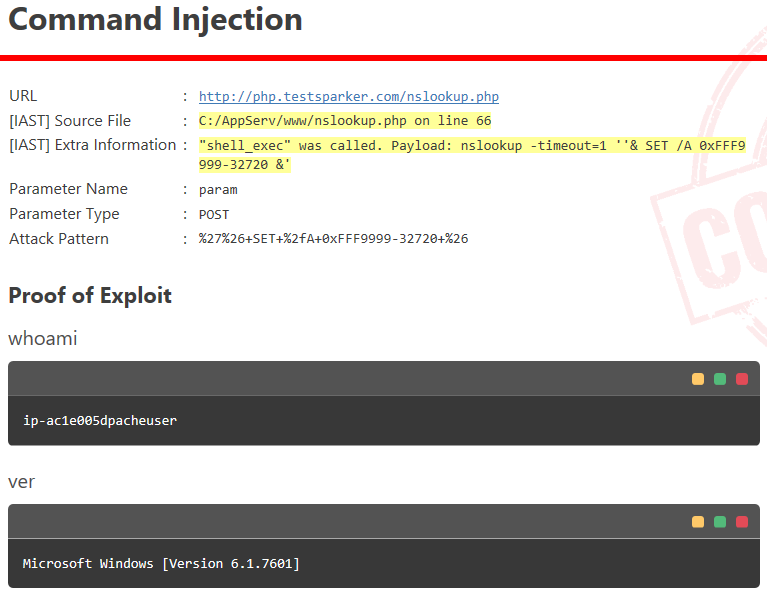
- Vulnerability details: displays further details about the vulnerability.
- Certainty value: indicates how much Invicti is sure about the identified issue.
- Impact: shows the effect of the issue or vulnerability on the target URL.
- Required skills for successful exploitation: details on how malicious hackers could exploit this issue.
- Actions to take: the immediate steps you can take to decrease the impact or prevent exploitation.
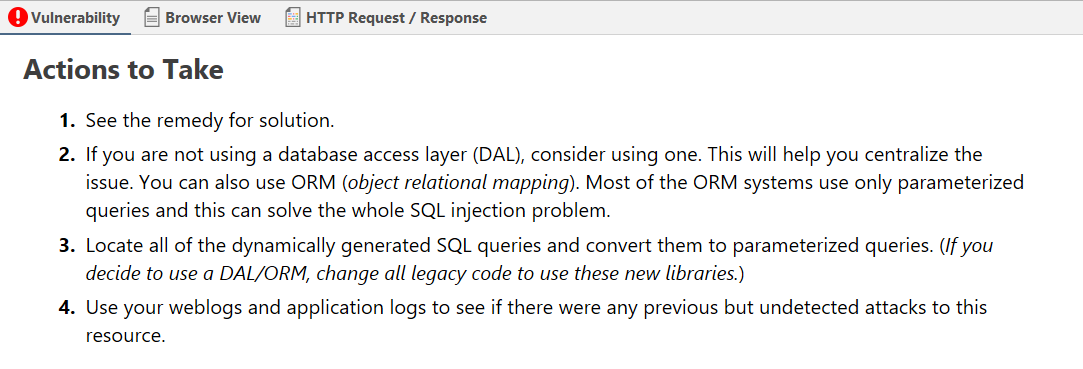
- Remedy: further steps to resolve the identified issue.
- External references: links to other websites where you can find more information.
- Classification:
- OWASP 2021: provides further information about this vulnerability according to the 2021 edition of the OWASP Top 10 list.
- CVSS 3.0: shows the severity score of vulnerability based on the 3.0 edition of the Common Vulnerability Scoring System.
- CVSS 3.1: shows the severity score of vulnerability based on the 3.1 edition of the Common Vulnerability Scoring System.
- Remedy references: further information on the solution for identified issues.
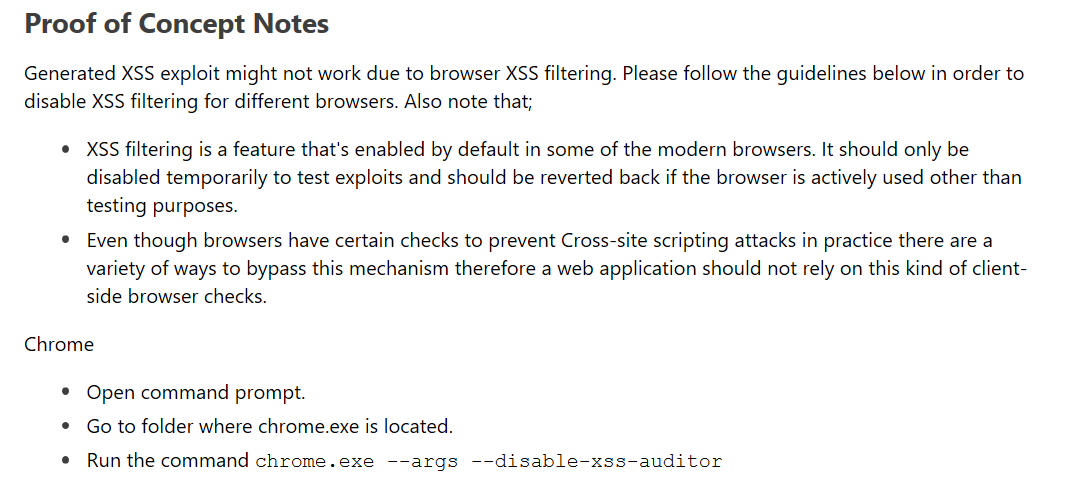
- Proof of concept notes: notes that demonstrate in principle how a system may be compromised.
- Request: the whole HTTP request that Invicti sent to detect the issue.
- Response: the reply from the system against the payload.
Show/hide scan details
This section provides some profile and policy settings that Invicti uses to adjust its scanning to reach more coverage. For example, it lists all enabled security checks.
It provides information on your preference in selecting this scan so that developers have more details on how this scan was run.
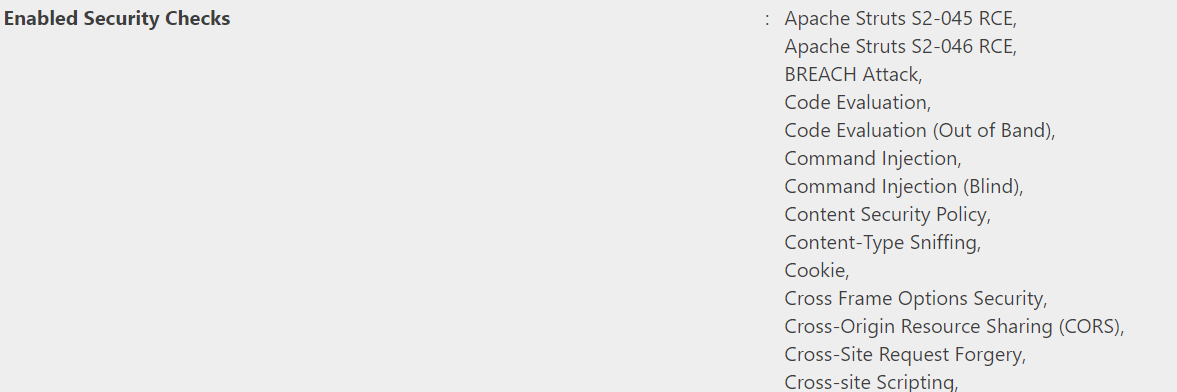
For more information, refer to the Security checks document.
Generate an OWASP Top Ten 2021 report in Invicti Enterprise
- Select Scans >Recent Scans from the left-side menu.
- Next to the relevant scan, choose Report.
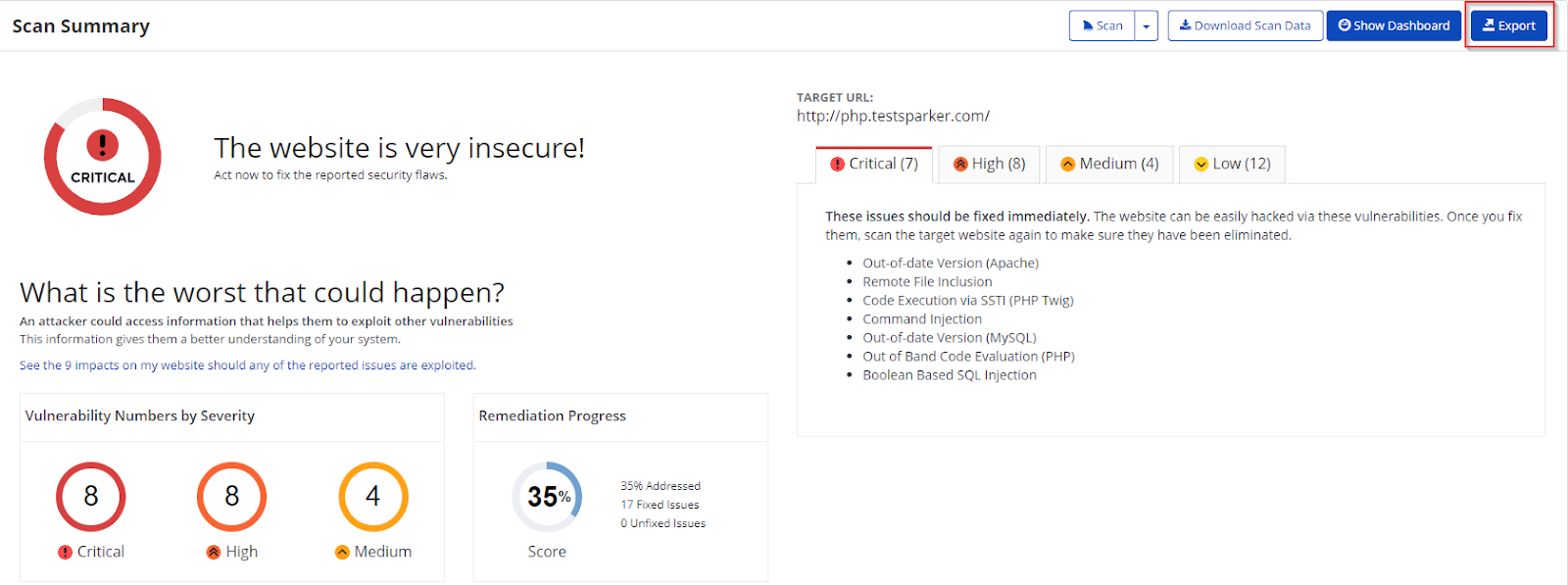
- On the Scan Summary page, choose Export.
- From the Report dropdown, choose OWASP Top Ten 2021.
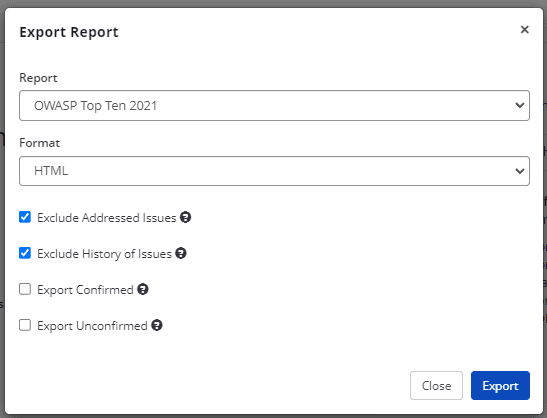
- From the Format dropdown, choose an option.
- If required, choose one of the following options to configure your report:
- Exclude addressed issues: excludes those issues you've already taken action on. (All Information level findings are marked as Accepted Risk automatically by default. To change this behavior, see Do not mark Information issues as accepted risks option in General settings).
- Exclude history of issues: excludes the issue history from the report. If unselected, only the last 10 history items appear in the report. For more information, refer to the Viewing issues in Invicti Enterprise document.
- Export confirmed: includes only those issues that are confirmed.
- Export unconfirmed: includes only those issues that are unconfirmed.
- Click Export.
You can view the report in the saved location.
Generate an OWASP Top Ten 2021 report in Invicti Standard
- From the ribbon, select the File tab. Local Scans are displayed. Double-click the relevant scan to display its results.
- From the Reporting tab, click OWASP Top Ten 2021 Report. The Save Report As dialog is displayed.

- Choose a save location, then choose Save.
- The Export Report dialog is also displayed at this point, with the Path field already populated from the previous dialog.
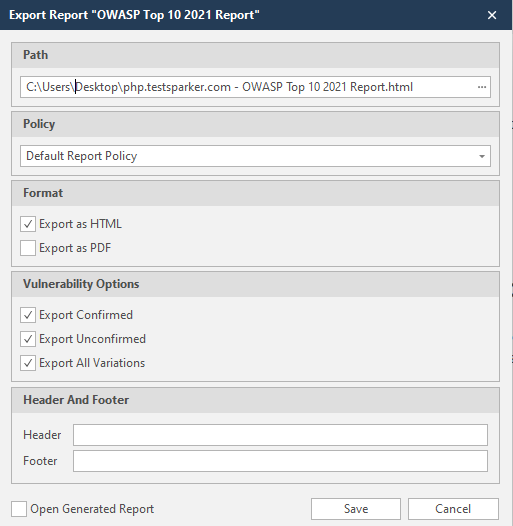
- From the Export Report dialog, you can decide on the following:
- Policy: choose the default report policy or customized report policy (refer to the Custom report policies document).
- Format: choose HTML and/or PDF format.
- Vulnerability options (choose one or all):
- Export confirmed: when selected, the report includes confirmed vulnerabilities.
- Export unconfirmed: when selected, the report also includes unconfirmed vulnerabilities.
- Export all variations: variations mean that if Invicti identified some passive or information level issues in more than one page, it doesn't show all these variations. However, users can change this by enabling or disabling this option.
- Header and Footer: enter relevant information that appears in the header and footer section of the report.
- Open generated report: when selected, your reports are generated when you choose Save.
- Click Save.
You can view the report in the saved location.
Need help?
Invicti Support team is ready to provide you with technical help. Go to Help Center