Integrating Invicti Standard with GitHub
GitHub is a web-based hosting service for version control. GitHub is mostly used for code but it has an issue tracking feature with labels, milestones, assignees and a search engine. Every issue is referenced in a card, which can then be dropped into a repository, used to track the progress of the bug, discuss fixes and assign relevant tasks to teammates.
This topic explains how to configure Invicti Standard to send a detected vulnerability to GitHub, enabling seamless integration with your development workflow for efficient vulnerability issue tracking and remediation management.
GitHub Fields
The following table lists and describes the GitHub fields available in the Send to Actions configuration:
| Button/Section/Field | Description |
|---|---|
| Add | Click to add an integration. |
| Delete | Click to delete the integration and clear all fields. |
| Create Sample Issue | Once all relevant fields have been configured, click to create a sample issue. |
| Action | This section contains general fields about the Send To Action. |
| Display Name | This is the name of the configuration that will be shown in menus. |
| Mandatory | This section contains fields that must be completed. |
| Server URL | This is the GitHub instance Server URL. |
| Repository | This is the repository name, which includes the issue. |
| Username | This is the name of the user. If you are using a personal access token (see below), leave this field blank. |
| Access Token | This is the personalized access token of the user. |
| Vulnerability | This section contains fields with vulnerability details. |
| Body Template | This is the template file that is used to create description fields. |
| Title Format | This is the string format that is used to create the vulnerability title. |
| Optional | This section contains optional fields. |
| Labels | These are the issue labels. |
| Assignee | This is the user to whom the issue is assigned. Accepted values are:
|
How to Integrate Invicti Standard with GitHub
Follow these steps to configure GitHub integration for automated vulnerability issue creation:
- Open Invicti Standard
- From the Home tab on the ribbon, click Options. The Options dialog is displayed
- Click Send To Actions
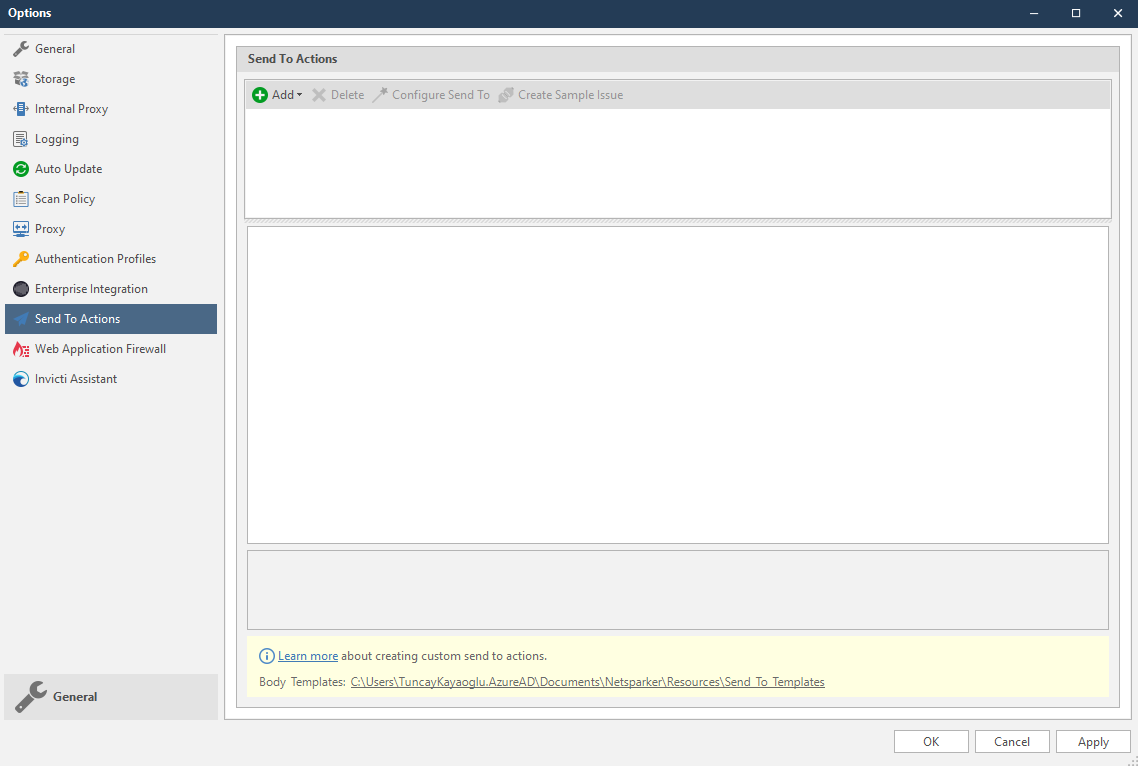
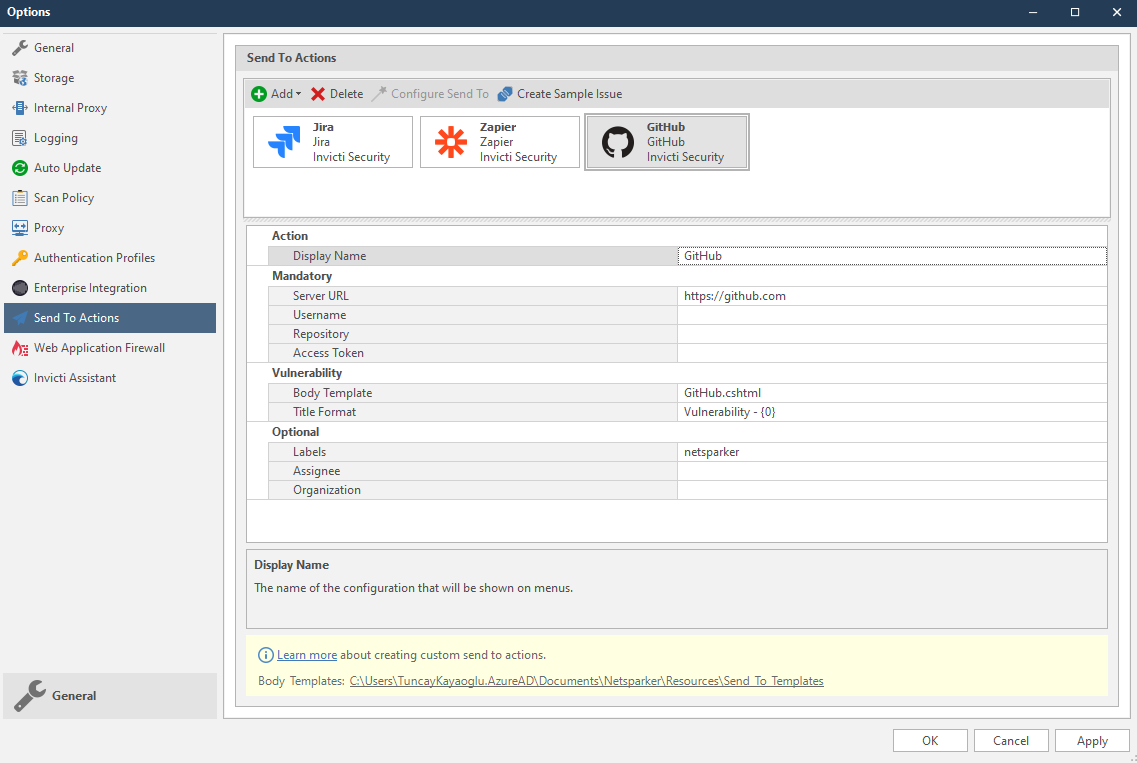
- From the Add dropdown, select GitHub. The GitHub fields are displayed
-
In the Mandatory section, complete the connection details:
- Server URL
- Repository
- Username
- Access Token (This can be generated from GitHub's User Options menu.)
-
In the Vulnerability section you can change the Body Template and Title Format
Body templates are stored in %userprofile%\Documents\Invicti\Resources\Send To Templates. If you use your own custom templates, store them in this location.
-
In the Optional settings you can specify:
- Labels
- Assignee
-
Click Create Sample Issue to confirm that Invicti Standard can connect to the configured system. The Send To Action Test confirmation dialog is displayed
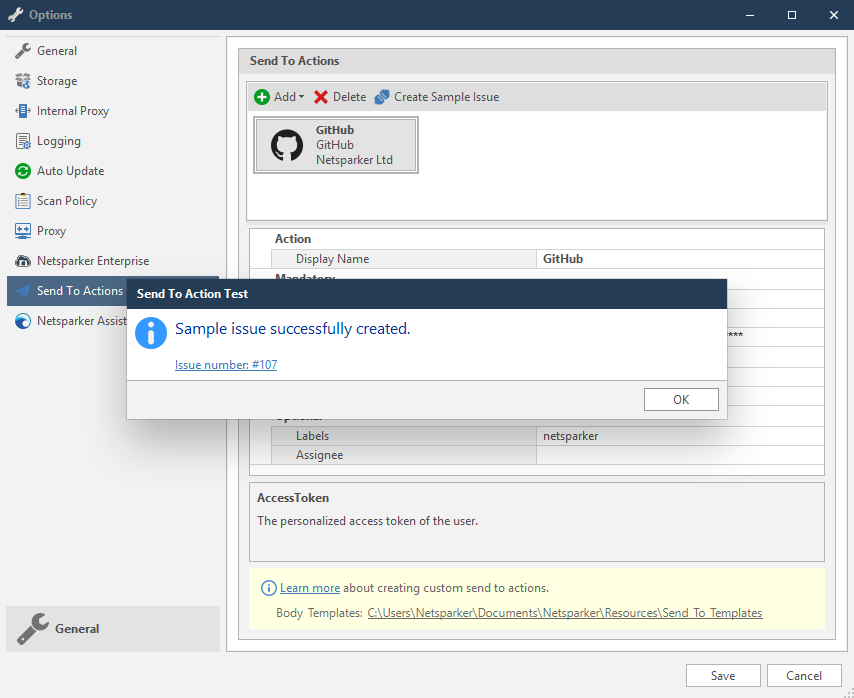
- In the Send To Action Test dialog, click the Issue number link to open the issue in GitHub in the default browser
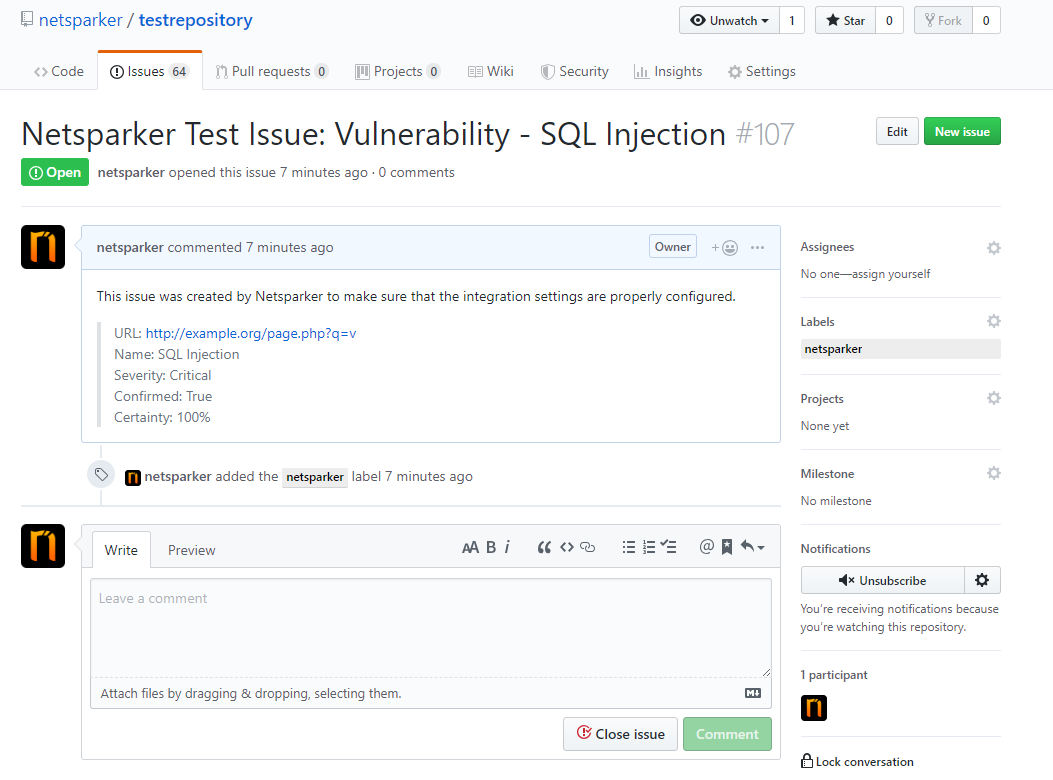
How to Export Reported Vulnerabilities to Projects in GitHub
After configuring the GitHub integration, follow these steps to export specific vulnerabilities:
Please ensure that you have first configured GitHub integration (see How to Integrate Invicti Standard with GitHub).
- Open Invicti Standard
- From the ribbon, select the File tab. Local Scans are displayed. Double-click the relevant scan to display its results
- In the Issues panel, right click the vulnerability you want to export and select Send to GitHub. (Alternatively, from the ribbon, click the Vulnerability tab, then Send to GitHub.) A confirmation message and link is displayed at the bottom of the screen.
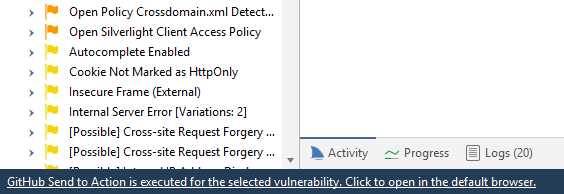
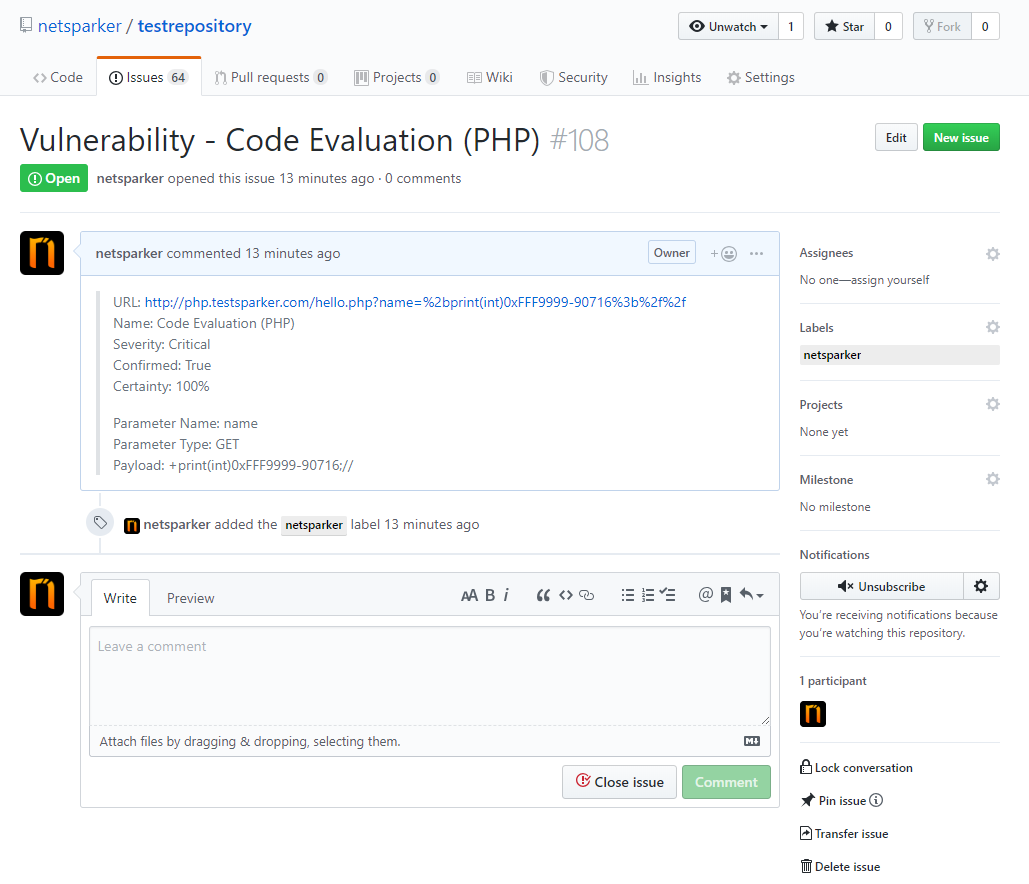
- Click the GitHub Send to Action is executed for the selected vulnerability link to view the newly-created issue in GitHub
- The vulnerability is automatically exported to GitHub. You can view it in GitHub's Issues tab
Need help?
Invicti Support team is ready to provide you with technical help. Go to Help Center